
Late last year, a YouTuber named Hunter Peterson made a video about how he flew with the most joked about, shameful discount airlines available at the time for 24 hours: Spirit Airlines.
If you don’t know this story by now, let me fill you in in less than 2 minutes.
He did it to see, with his own two eyes (bringing us along for the ride), if Spirit was really as bad as they say it is. Each time he stepped aboard a plane and awaited departure, his clock started. The countdown began.
The long and short of his experience was … it wasn’t that bad. Actually, it wasn’t bad at all. You can watch the full video here to see what I mean but in the interest of time I’ll cut to the chase. Because of the execution and efficiency measures taken from everyone involved—from the flight crew, pilots, and air traffic control—he failed to reach his goal of a full 24 hours by something like 40 minutes.
Well, if it weren’t for that experience, it never would have led to what happened next.
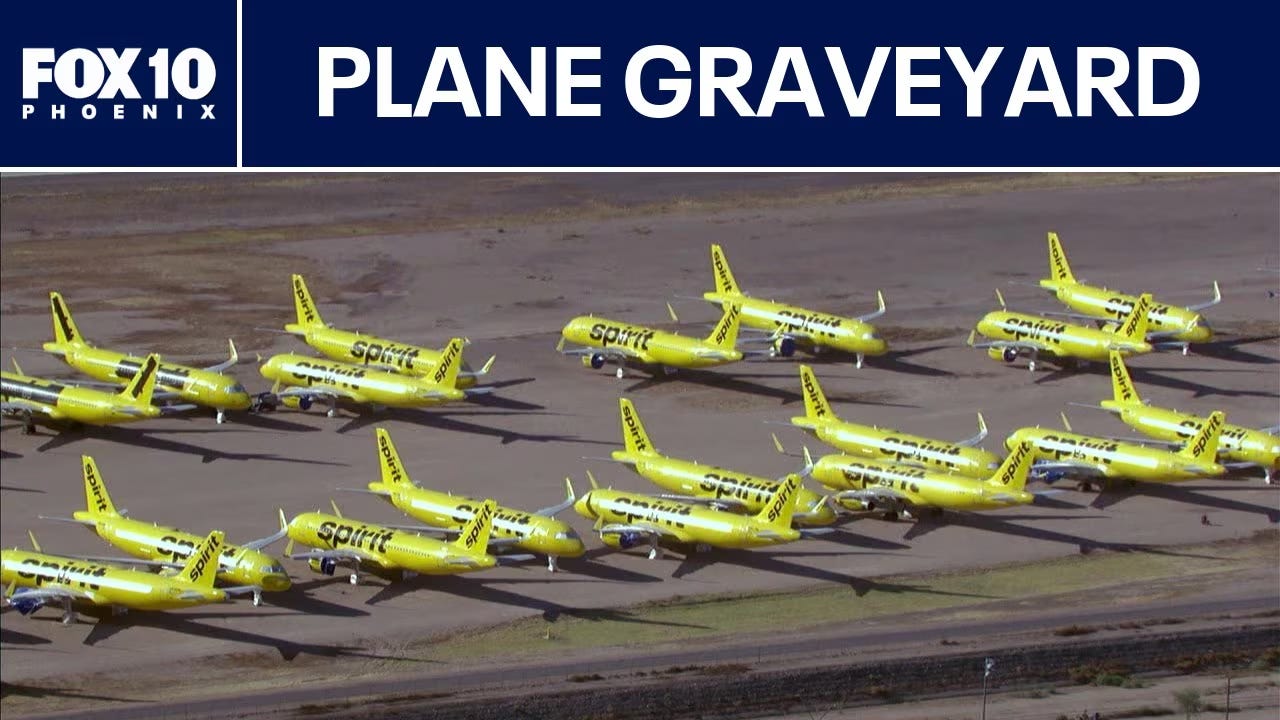
On May 2, the misunderstood airline officially closed its gates.
That same day, Peterson posted an epiphany that turned into what could potentially be a billion dollar idea:
To essentially crowdfund the purchase of the twice-failed airline and save it from imminent death.
Peterson’s goal was to raise enough money to buy the airline, then use “the cooperative model,” essentially owned by the people for the people. The idea is that Spirit is better for the industry at large, and in the hands of the public rather than getting stripped for parts or revived just to get tainted by private equity.
There are few, but successful cases where this model has worked. The most famous example is the NFL team, the Green Bay Packers, which has been owned by public shareholders since 1923. But also Ocean Spray—the company that makes the mixer for cranberry vodkas—who is owned by 700+ farmers across the Americas.
Unfortunately, this ambitious project turned out to be a failure to launch.
I was able to snag this screenshot before Peterson’s original website has been taken down. The project failed to meet its deadlines, and since then, he’s pivoted to a completely different business model.

By now most of the business’s assets have been auctioned off with namely its corporate campus in Dania Beach left to be sorted out.
The Role Spirit Airlines Played
Whether you think this was a great idea or a smooth-brained attempt at bailing out an already twice-bankrupt business, you have to admit this was a ballsy idea.
I think Peterson had good intentions, too. Warts and all, Spirit did play a systemic role in the industry.
A Business Insider analysis found that airfares across the 90 routes Spirit exited between 2024-2025 rose an average of 14%. So say what you want about the brand, but Spirit did something the larger legacy carriers previously didn’t want to do; be more transparent with additional charges and compete on price.
It’s not that Spirit was this great airline. It’s not like they were particularly known for their customer service.
It’s what it stood for.
For me, this experiment reminds me of the Big Short (Squeeze) of 2021.
When an army of retail investors on Reddit decided that a cornerstone of our youth, a dying video game retailer, was worth fighting for. They weren’t about to let someone else profit off our pain. So what did they do? They piled into the stock en masse to squeeze hedge funds that had bet heavily against the company out of their short positions, turning what started as a no-brainer trade into a whole cultural movement.
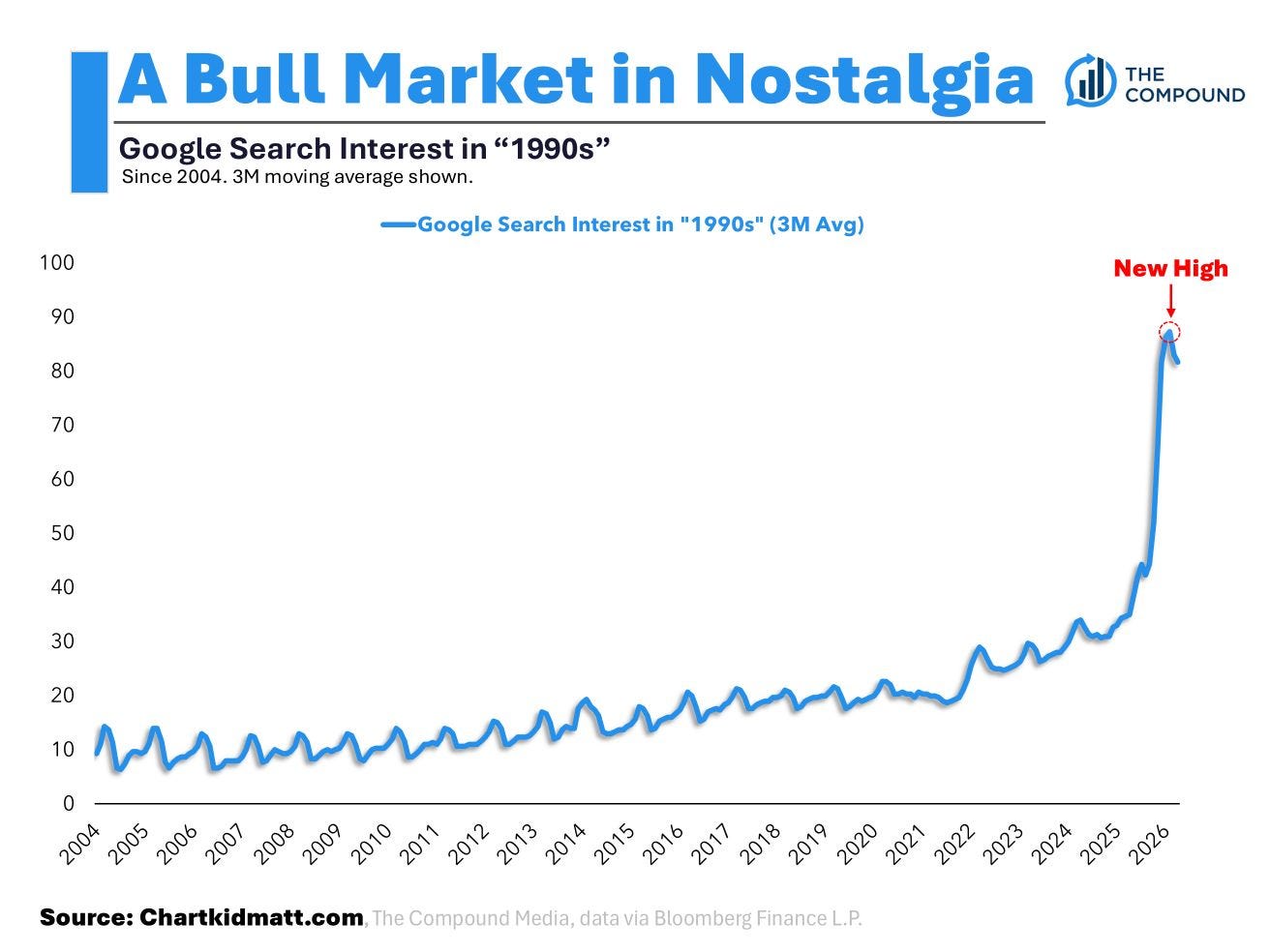
For better or worse, it’s like we can’t let go of the past. My coworker Chart Kid Matt (yes that’s his legal name) recently wrote a great post about this phenomenon.
Going to GameStop as a kid to trade in 7 perfectly good Playstation 2 games (mind you, that originally cost like $20-$60) to get 8 bucks in store credit and fist bump back is a core memory for many of us. And Spirit, in its own way, will be too. It was the airline you took when you were young, broke, and needed to get to Miami for a long weekend.
I just find it so interesting how far our generation of investors are willing to go to cling to the past. To try to preserve something we care about or miss.
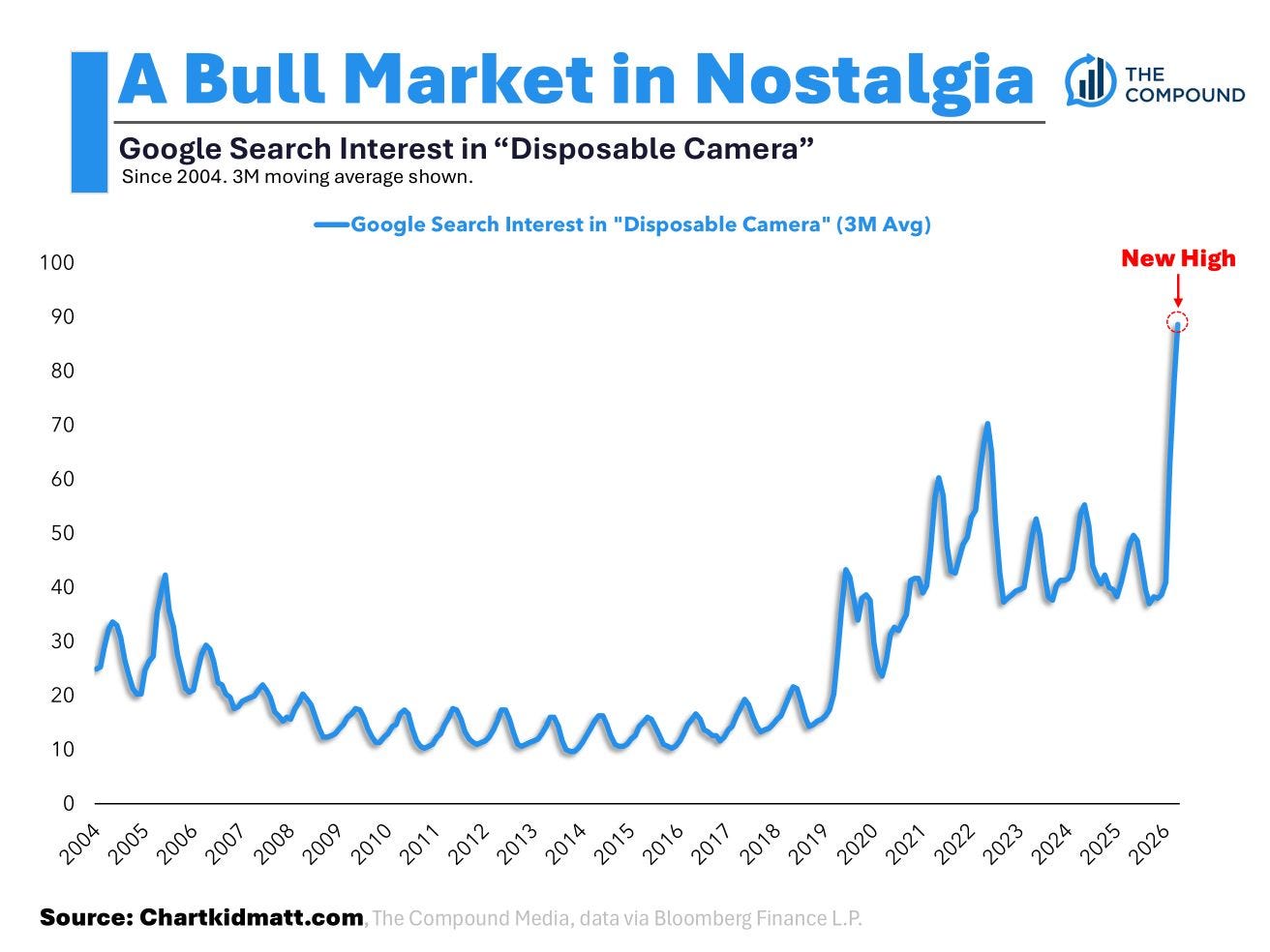
People are literally Google searching the 90s!
But if the initiative still turned out to be a bust and we knew Spirit was a risky business to begin with, why did I tell you all this?
College in 20 Years
You see, these experiments were less about investing and more about the internet’s ability to (financially) mobilize around a cause.
Peterson’s ability to see a problem and use all available resources to, at minimum, propose a solution gave me a glimpse of what I believe to be the future.
The looming question of what the future of education will look like in a post-artificial intelligence world.
I feel like I’ve heard a tongue in cheek version of this statement my entire career:
“If there even is going to be such a thing as college by then.”
First it was the fact that you could learn/watch a 5 minute video on just about any topic under the sun on YouTube. When Covid hit, the hybrid model was surely going to kill universities. The release of ChatGPT was merely confirmation bias’s best friend.
But in a world where you can ask the genie in a bottle questions about just about anything, how do you teach critical thinking?
I’m sure educators are already wrestling with this.
I’ve been out of school for years now. My graduating class of 2021 literally just missed the AI wave. However, the NYT recently published an essay by a newly minted Stanford graduate, Theo Baker, who wrote:
“A.I. is everything. We talk about it at the dining halls and in history classes, on dates and while smoking with friends, at the gym and in communal dorm bathrooms… Nearly all of higher education has been overtaken by this technology…
Cheating has become omnipresent. I don’t know a single person who hasn’t used A.I. to get through some assignment in college, yet the school was at first slow to realize how widespread this would become.
A degree [once] seemed like a guaranteed ticket to a high paying job; [that] door has been slammed shut… The machines have gotten so much better at coding that junior engineers can’t really compete. A Stanford computer science degree means something very different today from what it did when we set foot on campus…”
You can now access a research assistant, a writing agent, a financial explainer, code an entire program, whatever you need, on your phone/laptop 24/7. That’s pretty remarkable, even in a day and age of self-driving cars.
I believe we are at the precipice of what will be normal life for the foreseeable future.
AI is now a fact of life. You can’t put the toothpaste back in the tube.
And Baker is right. AI (specifically LLMs, but most all forms too) is everything and it’s everywhere. Why would this be any different for our most impressionable and quickest adopters of technology—students? Schools from middle school to post-grad will need to learn how to interact with and around it to keep up with the times.
But at the end of the day, I don’t think the institution of college is going anywhere.
There’s too much money tied up in the system. Too large of endowments, too many buildings with someone’s name on them, and too many families who’ve built their identity around what school their kid’s got into. And more importantly, (regardless of how good the prompt may be) AI doesn’t replace becoming an expert in your field; it is an extension of the user.
Which brings me to the conversation that inspired this whole article.
“Creativity Will be The New PhD”
While I was hopeful, I didn’t think Peterson’s idea would materialize into anything once the dust settled. An airline is a very complex business with tight regulatory restrictions, high operating costs, low margins, and extremely high barriers of entry.
However, the ambition and the follow through was there, but execution needed a little more planning.
Will we see an increase in ideas and half court shots like this in the future?
Maybe. Probably.
But we’ll also continue to see a lot of half-baked ideas and more AI produced content that is grammatically correct/visually stimulating but bad for the soul.
I was sitting with a client recently and, go figure, we got onto the topic of AI. What it means for the job market. What it will mean for his grandchildren. What skills are actually going to matter in ten, twenty years.
And he sat back and said to me,
“I think creativity will be the new Ph.D.”
The line was so damn smooth he couldn’t have gotten it from Chat. You see, that’s the type of thinking that can’t be replaced.
Now, creativity as a replacement for years of academia, field work, and peer reviews is certainly an overstatement. I think what he meant by that is that creativity—intellectual curiosity, an unconventional perspective, effectively communicating and collaboration to find a solution—will make you highly marketable in the future.
But it also struck a chord, because it reminded me how the same thing one of my freshman year business professors told me would help us advance in this world is the same thing that will be even more important in the future: soft skills.
Being you. Being able to communicate your thoughts and influence others. Again, thinking outside the box, seeing the bigger picture, connecting two seemingly unrelated ideas into something useful.
I’ll be the first to admit, mastering social skills is hard. Earning a high level of emotional intelligence takes time.
Yet technical skills are table stakes these days. Being able to recite certain information is no longer the differentiator it once was. As a professional you should be at minimum competent. AI only exacerbates that. I think of AI as a form of UBI: universal basic information. Anybody can respond to a client email with an unedited response straight from ChatGPT.
The differentiator will be what you do with that information. How you think about it. The questions you ask. The problems you choose to spend your time and brainpower working on.
While we can’t even fathom what 20 years into the future will look like—not contrary to what I just said—I believe the reality is many things won’t change.
Inequality will still exist and may be even worse. We will still have wars. We will still have extreme famine in poor communities around the world. We will still have problems.
But we will also still have college football (God I hope). We will still have kids who want to change the world for the better, and make money in the process.
There’s a stat that roughly 60% of the jobs that exist today didn’t exist 80 years ago.
The jobs my kids will do someday likely doesn’t exist yet. I’ve always believed the point post-secondary education isn’t to produce a farming system of thinkalikes and good grades, but to challenge young people who know how to think, how to create, how to look at a problem and ask what can I do about this? Even if their ideas don’t work out.
Baker wrote “higher education was not equipped for the A.I. revolution.” True. But I would add ‘today’. We—employees, employers/business owners, and higher education—were not prepared for the rapid change this technology brought seemingly overnight. However, this is just the start. Today’s LLMs will give you back what you put in. But the better you understand a topic the better questions you can ask it the better results you’re going to get.
Buying an airline isn’t something you can concoct in several weeks.
Neither is becoming an expert in the airline industry.
My guess is, Peterson had no f*cking clue how to run an airline. To be fair, he didn’t need to have a bold idea and the gumption to run with it.
Before it was all said and done, Peterson was able to attract over $400M in pledged assets!
Now imagine for a second he was a college senior studying aeronautical science and business. Combine that with help from his finance bro friends, using social platform to convince an airline operator to talk to him, and a little dose of ChatGPT.
That would be a hell of a dissertation.
💯